How a DevSecOps Course Prepares You for Real-World Compliance
Introduction:
In today’s fast-moving digital landscape, businesses demand faster software delivery without compromising security or compliance. However, as systems scale and threats evolve, ensuring secure and compliant DevOps pipelines becomes a challenge. This is where DevSecOps the integration of Development, Security, and Operations plays a vital role.
A DevSecOps Course is more than just a technical upskilling program; it is a transformation in how professionals think about automation, governance, and continuous security. For beginners, this training acts as a gateway to understanding how security aligns with speed. For seasoned developers, it deepens knowledge about automation frameworks and compliance controls on platforms like AWS.
In this comprehensive guide, we explore how a structured AWS DevOps/DevSecOps Training program prepares learners for real-world compliance challenges from mastering CI/CD pipelines to enforcing cloud governance policies that align with industry standards like ISO 27001, SOC 2, and PCI DSS.
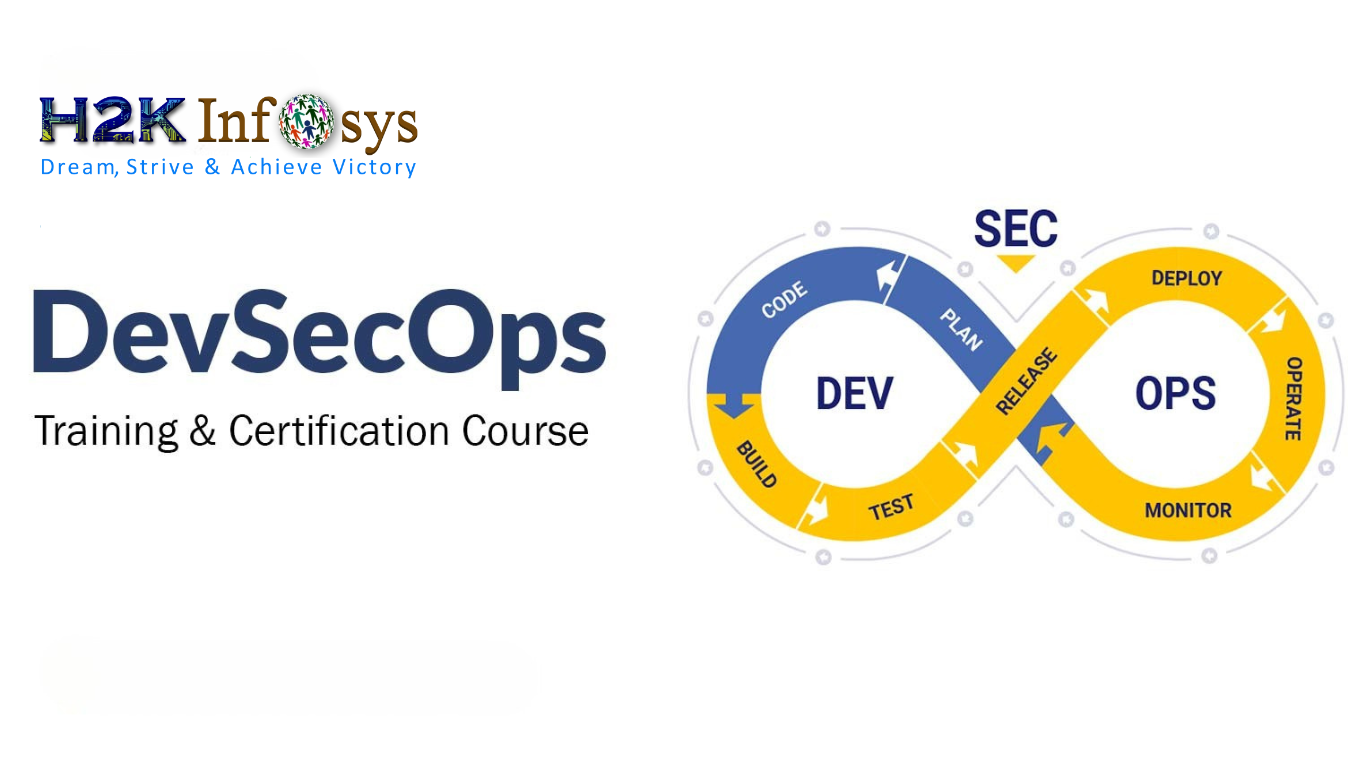
The Growing Demand for DevSecOps Skills
Why DevSecOps Has Become Essential
Over the last decade, traditional DevOps focused on automating delivery and improving speed. Yet, the lack of embedded security practices led to vulnerabilities and compliance violations. As cyber threats increased, organizations realized the need to “shift left” embedding security earlier in the software development lifecycle.
A DevSecOps Course trains professionals to integrate automated security testing, compliance validation, and risk management from the first line of code. According to a 2024 Gartner report, over 70% of large organizations are adopting DevSecOps practices to address the increasing demand for secure software delivery.
This shift reflects a growing market need: companies want engineers who can automate not only deployment pipelines but also security compliance frameworks.
Understanding DevSecOps: The Foundation of Secure Automation
What is DevSecOps?
DevSecOps stands for Development, Security, and Operations. It merges these three domains into one continuous process that ensures every build, deployment, and update follows secure coding, monitoring, and compliance standards.
In a DevSecOps Training for Beginners, students learn how to apply security principles throughout the development lifecycle from planning and coding to deployment and monitoring. This integration helps teams identify vulnerabilities early, reducing remediation costs and improving product reliability.
The Core Principles of DevSecOps
Shift Left Security – Embedding security checks in earlier stages of development.
Automation First – Automating security testing, audits, and compliance reporting.
Continuous Monitoring – Using observability tools to track security posture in real time.
Collaboration – Ensuring development, security, and operations teams share common objectives.
Compliance as Code – Defining compliance controls through versioned, testable code.
Through structured practice and AWS-driven simulations, learners understand how to integrate these principles within real-world DevOps pipelines.
Why Compliance Matters in DevSecOps
The Role of Compliance in Cloud Environments
Compliance refers to adherence to legal, regulatory, and internal standards that govern data protection, access control, and operational processes. For AWS users, compliance becomes complex because cloud infrastructure operates in shared responsibility models.
For instance:
AWS ensures physical and infrastructure security.
The customer (DevSecOps team) must configure services securely and maintain compliance with standards such as GDPR, HIPAA, and SOC 2.
Common Compliance Frameworks in DevSecOps
| Compliance Standard | Focus Area | Example Implementation in AWS |
| ISO 27001 | Information Security Management | AWS Config Rules for auditing configurations |
| PCI DSS | Payment Card Data Security | AWS WAF and Shield for DDoS and web security |
| SOC 2 | System and Organization Controls | Automated IAM access reviews |
| HIPAA | Healthcare Data Protection | AWS CloudTrail for audit logging and encryption |
| GDPR | Data Privacy and Protection | AWS Key Management Service (KMS) for data encryption |
A DevSecOps Course teaches how to map these compliance requirements directly into CI/CD workflows using tools like Jenkins, GitHub Actions, and AWS CodePipeline.
How a DevSecOps Course Builds Real-World Compliance Skills
1. Cloud Security Fundamentals on AWS
The first stage of most AWS DevOps/DevSecOps Training programs focuses on understanding AWS cloud architecture, networking, and access management. Learners explore:
Identity and Access Management (IAM)
Virtual Private Cloud (VPC) segmentation
Encryption and Key Management
Multi-Factor Authentication (MFA)
Hands-on labs allow students to simulate misconfiguration scenarios such as publicly exposed S3 buckets and apply corrective measures using automation. This forms a solid foundation for compliance readiness.
2. Infrastructure as Code (IaC) for Compliance
Infrastructure as Code (IaC) tools like Terraform, AWS CloudFormation, and Ansible are critical to DevSecOps workflows. By writing infrastructure as code, teams can embed compliance and security rules directly into configuration files.
Example:
# AWS CloudFormation template for enforcing encryption
Resources:
SecureBucket:
Type: AWS::S3::Bucket
Properties:
BucketEncryption:
ServerSideEncryptionConfiguration:
- ServerSideEncryptionByDefault:
SSEAlgorithm: AES256
In this example, every new bucket created through the pipeline will be encrypted by default. Through DevSecOps Training for Beginners, learners gain hands-on experience building compliant infrastructure from the ground up.
3. Continuous Integration and Continuous Deployment (CI/CD)
A DevSecOps pipeline integrates automated security scanning at every stage of the CI/CD lifecycle. Students learn to implement:
Static Application Security Testing (SAST) for code vulnerabilities
Dynamic Application Security Testing (DAST) for runtime security
Software Composition Analysis (SCA) for third-party dependencies
These automated checks ensure compliance is not a manual afterthought but an integrated part of software delivery.
Sample pipeline (GitHub Actions):
name: Secure Deployment
on: [push]
jobs:
build:
runs-on: ubuntu-latest
steps:
- name: Checkout Code
uses: actions/checkout@v3
- name: Run SAST
uses: snyk/actions@v1
- name: Deploy to AWS
run: aws deploy push --application-name SecureApp
Learners in a DevSecOps Course practice creating and optimizing such pipelines, ensuring every build meets compliance benchmarks.
4. Continuous Compliance Monitoring
One of the most important takeaways from DevSecOps training is understanding how to continuously monitor compliance. AWS provides tools like:
AWS Config – Tracks configuration changes and compares them to compliance baselines.
AWS CloudTrail – Logs user activities for audit analysis.
Amazon GuardDuty – Detects malicious activity through intelligent threat detection.
Learners implement automated alerts, compliance dashboards, and reporting systems that notify teams when deviations occur.
Example Scenario:
If a developer accidentally opens an S3 bucket to public access, AWS Config can automatically trigger a Lambda function to revert permissions maintaining compliance without human intervention.
5. Compliance Automation Using Policy-as-Code
Policy-as-Code transforms compliance controls into programmable rules. This allows teams to define policies once and enforce them automatically across all environments.
Popular tools:
**Open Policy Agent (OPA)
**
**HashiCorp Sentinel
**
**AWS Organizations Service Control Policies (SCPs)
**
A sample OPA rule for IAM policy restrictions:
package aws.iam
deny[msg] {
input.policy.Action == "s3:*"
msg = "Overly broad IAM policy detected"
}
This rule detects policies granting unrestricted S3 access, ensuring compliance with the least-privilege principle.
A DevSecOps Certification Path helps learners build these policies, test them in pipelines, and automate enforcement critical for real-world governance.
6. Incident Response and Forensics in DevSecOps
Compliance readiness isn’t only about prevention it’s about response. In case of a breach, having an automated incident response plan aligned with compliance frameworks is vital.
During training, learners build:
CloudWatch alarms for abnormal activities
Lambda-based automated remediation scripts
Evidence collection workflows compatible with audit requirements
Example: If AWS GuardDuty detects a compromised EC2 instance, a Lambda function can isolate it automatically and preserve logs for forensic review.
Such exercises prepare learners for real-world compliance audits and security events.
7. Integrating Compliance Reporting and Auditing
Compliance frameworks often require traceable documentation. A strong DevSecOps Training for Beginners includes lessons on automating compliance reports.
Learners work with:
AWS Security Hub to aggregate compliance findings
AWS Audit Manager for audit-ready evidence
CloudWatch Dashboards for visual compliance tracking
This automation reduces audit fatigue and ensures consistent reporting across environments. Instead of spending hours compiling manual evidence, DevSecOps engineers can produce audit reports in seconds.
Real-World Case Studies: DevSecOps in Action
Case Study 1: Financial Services Firm Achieving PCI DSS Compliance
A global banking organization adopted DevSecOps to streamline its compliance with PCI DSS (Payment Card Industry Data Security Standard). By automating compliance checks using AWS Config and Security Hub, they reduced their audit preparation time by 60%.
The DevSecOps engineers implemented IaC templates that enforced encryption, network isolation, and logging automatically ensuring every new environment was PCI-compliant by design.
Case Study 2: Healthcare Startup Meeting HIPAA Standards
A healthcare startup integrated AWS services like KMS, CloudTrail, and GuardDuty through DevSecOps automation. With continuous compliance pipelines, every deployment underwent security scanning and encryption verification.
The result: the company maintained HIPAA compliance while delivering software updates weekly previously, compliance reviews delayed releases for months.
Case Study 3: E-Commerce Platform Achieving SOC 2 Certification
An e-commerce platform pursued SOC 2 certification by embedding policy-as-code and AWS audit automation. By leveraging CloudFormation and OPA, their DevSecOps team ensured that all access policies met SOC 2’s least-privilege and traceability requirements.
This proactive approach minimized manual reviews and passed external audits with zero findings.
Building a Career Through the DevSecOps Certification Path
Step 1: Learn the Basics
Start with foundational cloud and DevOps knowledge:
Linux and Networking
Git and Version Control
CI/CD Fundamentals
A DevSecOps Training for Beginners provides practical exposure to these essentials before integrating advanced security concepts.
Step 2: Master AWS DevOps Tools
Key AWS services to focus on include:
CodePipeline – Continuous delivery automation
CodeBuild – Automated build and testing
CloudFormation – Infrastructure as Code
CloudWatch – Monitoring and observability
Mastering these tools helps learners automate security validation at scale.
Step 3: Implement Security and Compliance
Once comfortable with DevOps workflows, learners add security automation layers:
SAST and DAST tools
AWS Security Hub and Config
IAM policy analysis
Encryption management
This step ensures that every DevOps activity aligns with compliance objectives.
Step 4: Obtain DevSecOps Certification
A structured DevSecOps Certification Path validates technical and compliance knowledge. While different institutions offer certifications, the main focus is to demonstrate competence in:
Secure pipeline automation
Cloud compliance configuration
Incident response and monitoring
Certifications act as proof of a learner’s ability to manage secure, compliant DevOps ecosystems.
The Real-World Impact of DevSecOps Training
Increased Security Awareness
Graduates of DevSecOps courses understand how each deployment decision impacts overall compliance and data security. This awareness helps organizations reduce the attack surface.
Accelerated Software Delivery
By embedding security checks in CI/CD, release cycles become faster without sacrificing compliance. Teams deliver secure products continuously.
Reduced Compliance Costs
Automated compliance monitoring and reporting eliminate manual audit labor, reducing compliance costs significantly.
Enhanced Employability
Professionals with DevSecOps expertise are in high demand. Roles such as DevSecOps Engineer, Cloud Security Specialist, and Compliance Automation Architect are among the top-paying positions in the tech industry.
Key Takeaways
DevSecOps Course training teaches how to integrate security into every phase of the software lifecycle.
Real-world compliance on AWS involves understanding frameworks like ISO 27001, PCI DSS, and HIPAA.
DevSecOps Training for Beginners covers hands-on exercises in IAM, IaC, CI/CD, and policy automation.
The DevSecOps Certification Path helps learners validate their expertise and prepare for enterprise-level compliance challenges.
Continuous learning and automation are essential for staying compliant in the cloud era.
Conclusion:
Compliance is no longer a one-time event. It is a continuous journey powered by automation and collaboration. A DevSecOps Course equips professionals with the mindset, skills, and tools to implement secure pipelines and achieve real-world compliance across cloud environments.
Start your DevSecOps journey today master automation, embrace security, and build the compliant systems of tomorrow.